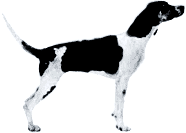
Information, Facts & Origins of the English Foxhound
The English Foxhound comes from England and is a dog of large size with a powerful body. It was bred and used specifically to hunt foxes. It's origins can be dated back to the 1700's and it is classified as one of the Hound Dog Group which we go on to describe in detail in the section at the bottom of this page. Name Facts and Dog Names: This dog is often referred to as the British Fox Hound. English Foxhound Dog Names The English Foxhound - A Scent Hound
The English Foxhound belongs to the collection of dogs referred to as Scent Hounds, which specialise in following the scent or the smell of its quarry. It wasn’t until the mid 1500's that hounds began to be classified according to their purpose, i.e. sight hounds, scent hounds, etc. Scent Hounds have distinctive characteristics, features and traits which are perfect for their purpose. They have large noses which have deep, open nostrils and their lips are loose and moist, designed to pick up scent particles and follow the trail of an animal. Their ears are long which concentrates the scent on the nose. Their bodies are designed for endurance, an essential asset when following any scent trail. Hunting takes different forms and as man opts for hunting their quarry either on foot or on horseback the scent hounds have been selectively bred to produce small legs, to enable a man to easily follow on foot, or longer legs suited to keep up with a man on horseback. Most scent hounds were used in packs - making a loud, deep baying noise alerting hunters to their location. As a pet the English Foxhound is a very active dog and is best suited to families who are very experienced with dogs. It has a friendly & non aggressive character. Information, Facts & History of the English Foxhound Dog - Fox Hound
The English Foxhound was bred in England by the Nobility and Aristocracy specifically for the sport of foxhunting. It was probably cross bred originally from French hunting dogs during the Middle ages. The history of England is long and colourful and was highly influenced by the French during Medieval times. The influence occurred during events such as the Norman Invasion of 1066 and it will come as a revelation to many that the only spoken language of the famed English King, Richard the Lionheart, was in fact French. English Hunters wanted smaller and faster dogs than the traditional Hound dogs who could join in the horse back hunts. Organized fox hunts have played a part in English hunts since the practice began in the 13th century. The breeding process included strains of the Bloodhound Terrier, Bulldog and Greyhound to eventually produce the English Foxhound known today. Stud books have been carefully kept by the British Masters of Foxhounds Association since at least 1800. The English Foxhounds continue to work in hunting packs today, participating in Fox hunts. Riding to hounds is a highly traditional activity for the wealthy and is steeped in ceremony. The care and breeding of the packs are under the direction of the Master of the Hounds and the Hunting costumes and clothing of the Fox Hunters riding their horses and surrounded by the hounds create a typically English picture, is viewed as part of the English heritage which has been depicted in countless paintings by English artists. Foxhunting, and other blood sports, are continuously under great debate in the UK with frequent anti - bloodsport protestors disrupting Fox hunts. Farmers and the English aristocracy argue that the sport keeps down the number of foxes - it is believed that the tradition of Fox hunts will eventually be abolished. Foxhounds came to America in the 1700s with the first settlers - the American Foxhound is leaner and faster than the English Foxhound. The English Foxhound was first registered by the AKC (American Kennel Club) in 1909.
Description of the English Foxhound Dog and Puppies - Coat and Colours Fox Hound info
The English Foxhound's coat comes in a range of any recognised hound colours: Usually tri-colour (black, white & tan), or bi-colour with a white background. The coat is dense, short and weather proof.Dog Health information - potential health problems of the English Foxhounds
All owners of dogs and puppies are concerned about the health care of their pets and just as with humans dog health issues arise from time to time. Resolving dog health problems, including those of the English Foxhound, can prove to be costly and it would be wise to consider the benefits of obtaining dog health insurance. Diseases in dogs may occur because of trauma, infection, immune system abnormalities, genetic factors, or degenerative conditions. Common health problems and questions occur in relation to the Bones, Joints, Muscles, Nerves, Ears, Eyes, Teeth and the Mouth. Other, more serious, issues can relate to the Digestive System, Heart & Respiratory Systems, Immune & Blood Systems, Reproduction and Urinary Systems. Potential health problems of the English Foxhound may be checked via the Dog Symptoms Sorter, but can include:- Hip and Elbow Dysplasia (abnormal development of joints referred to as CHD - Canine Hip and Elbow Dysplasia)
Online Encyclopaedia of Common Dog Health Problems
Please click the following link for additional information which we have provided via our: Online Encyclopaedia of Common Dog Health Problems This describes the most common canine health problems concisely but simply without using medical jargon. A section on Dog and Puppy Vaccinations is also included offering information on each of the diseases, symptoms and effects for which immunization vaccines are available. Not sure of the name of the dog or puppy illness? ADog Illness Symptoms Sorter is also featured. The Online Encyclopaedia of Common Dog Health Problems should only be used as an informational guide and when and if any dog or puppies health problems occur it is essential to raise any questions you may have with a Dog Health care professional. |